

Inheritance
Subscriber Essay for the Writing It Real Series on Writing From Grief

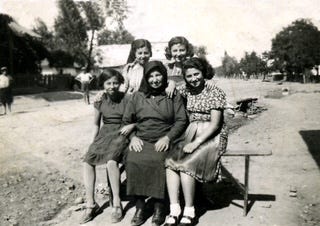
In 1908, my maternal grandparents, with their two small children—who would become my eldest aunt and uncle—left their home in Czechoslovakia and boarded a steamship for Philadelphia. They joined the crush of almost two million Eastern European Jews who arrived between 1882 and 1924.
My mother was in her 70s and recovering from triple bypass heart surgery when she told me my grandfather was an alcoholic. She was bitter, using a tone I’d never heard her use before when speaking of her parents. She barely remembered her father; she was passing along a story told to her.
I don’t know why my mother told me this so late in her life. I’d grown up believing he’d died of pneumonia. Maybe she understood more than she let on about how seriously ill she was. She had been battling heart disease for many years. Perhaps she unburdened herself of information that had weighed her down.
When my grandfather lost the job his sponsors got him in Philadelphia, he and his family boarded a train for Manhattan. They became part of throngs of people in the streets, squeezed between pushcarts and horse-drawn carriages on the Lower East Side. My grandfather worked in a garment business again or for a butcher, I can’t recall what I was told. When I asked my cousin Vivian, she told me, “He was in chickens.”
My grandparents became a family of six. In addition to enduring crowded and unhealthy conditions, Jewish immigrants were forced to assimilate by working on the Sabbath. The motto was, “Stay out Saturday, don’t come to work Monday.” The poverty my grandparents had hoped to escape was their daily life. The family missed Czechoslovakia.
Wealthy cousins who had brought the family to America did so out of responsibility, not joy, and so they put up the funds to pay for my grandparents’ passage across the Atlantic with their children; they were among the one in twenty disenchanted Jewish immigrants returning to Europe in 1915.
Long before learning of my grandparents’ passages forth and back, I loved the energy of the crowded streets of the Lower East Side. As I shopped on Grand Street, I imagined the pushcarts of long ago filled with hammers, nails, and knick-knacks or ripe plums and juicy tomatoes, like traveling hardware and grocery stores. I’d picture men and women haggling over prices, listen for the sounds of Yiddish—my first language. While Yiddish had always been harsh to my ears, the sounds comforted me, made me whole.
In between the secular faces I passed in the streets were Hasidic families, the men in their black suits, with the fringes from their tzitzis peeking out from beneath their jackets. Young mothers, their hair covered in the Orthodox tradition with wigs, would walk by pushing a stroller, a small army of children holding on. I’d have an urge to speak Yiddish to them as if to say, I’m like you. In fact, I’m more like you than you are! I’m the real article. But then I’d think, I’m not like them at all. I’m not Orthodox. I date Christian men. When Jews fast on Yom Kippur, I wake to brewed coffee and toast with jam.
Not out of disrespect. Out of an anger that bounced around inside me seeking a place to rest. A dissatisfaction with my life that had at its stem the stories my mother told me and the stories my father hadn’t. This stem was so deeply buried in the soil of my family history that I couldn’t reach beneath it, grab the roots. They had grown like tentacles under the Atlantic Ocean, reaching from Czechoslovakia to America and then back.
I shut out learning my parents’ cultural history because it brought me close to my mother’s stories of Hitler that overwhelmed me as a child. It’s only recently that I’ve had a desire to claim my inheritance. Only something I can do in my mother’s passing.
My first stop, New York City’s Tenement Museum. I walked to 108 Orchard Street one Sunday afternoon for a tour. As a lifetime New Yorker, walking the city is as natural to me as breathing; one of my favorite activities, too. And so, I donned my sneakers and felt adventurous, walking down my beloved Second Avenue from E. 42nd Street—leaving my modern-day world of Starbucks and Borders—and entering the past.
At Delancey Street, I hooked a left onto Orchard Street. The building looked more like a bookstore filled with books and assorted New York City paraphernalia than a museum. But inside was a treasure chest. Arriving early, I eagerly pored through the books, cramming facts into my brain. Immigrants in the nineteenth and early twentieth centuries herded in steerage, seasick, no bathrooms, humiliated, traumatized. One-hundred thousand concentration camp survivors brought over after the war.
I joined an hour-long tour called “Piecing it Together” and visited the apartments of two families who had moved into the tenement building at 97 Orchard Street in 1890 and 1901. Standing in the same building’s dark hallway, the paint peeling off the walls, I learned of the overcrowded rooms, the garment businesses housed in apartments so that cotton dust kicked up day and night, men and women sick from brown-lung disease, babies sleeping in kitchens near the stove for warmth, the high infant mortality rate.
We climbed the narrow staircase single file, and I felt my grandparents’ footprints beneath my feet, dug my sneakers into their tracks. Felt proud and bereft, too. Knowing that they had traded one uncertain fate for another was eerie, unsettling.
Had they stayed in America, their lives might have become richer in time. They would have witnessed the Holocaust from a safe distance, been ashamed of their good fortune like so many American Jews. Had my mother been born on Ludlow Street in what was called the Jewish Lower East Side, she would’ve been American. Her parents might have had money to buy her dolls and pretty dresses. She would not have had a mournful past.
Within the family history, I outline my mother; color in her hair, from brunette to blonde; her aqua eyeshadow; add her thick accent—draw a picture of my brother Jack saying to her, It’s a tall tree, Mommy, not a tall three. And my mother, trying hard—th-th-trrrreee—the word falling to the ground wet and hard.
I get it all down, believe I’ve captured my mother. But then I walk into my apartment, shoulders weighed down by my computer and a grocery bag. I put away cartons of yogurt, bagged salad, a jar of preserves. Do my laundry. Put my folded nightgowns in a drawer. And in that drawer, by chance, I find a note my mother wrote to me. My heart freezes. I know why I put the note in the bottom of a drawer. Too painful to look at, to read again.
Written in her phonetic script are eight words: Ve luv yu. Kol us ven yu ken. (We love you. Call us when you can.) My eyes well up, and only then do I understand the essence of who my mother was: A woman who wanted me to love her unconditionally—as a mother loves her child. A woman who loved me effusively, at times harshly, but the best way she knew how.
Only then, with her words in my hands, are she and Eastern Europe truly in the room with me. I flinch from the knowledge that I didn’t save her, that I wasn’t good enough to be the daughter of an Auschwitz survivor.
Guilt and rage slice through me. Guilt for what I didn’t do. Rage for what was expected from me.
I stand still, let it all course through me.
I put the note back in the drawer. Then the rest of my laundry—tee-shirts, towels, socks. I can write my mother this way or that way, any way I feel on a given day. I can present logical reasons for why I one day tried to untangle myself from her and my mournful past by default.
But my mother’s written words are her truth, what she wanted from me seemingly so little. Kol us ven you ken.
I turn on NPR, take a multi-vitamin, check the yoga schedule scotch-taped to my refrigerator. I know how to bring myself to even keel. To a place where I forget that I don’t deserve to be here long after my mother’s death.
***
Sandra Hurtes is a writer living in New York. She is currently working on a memoir, Halfway Home. She has an MFA from Hunter College.
 | A guest post by
|
Beautiful essay--thought-provoking. It makes me think about how much I don't and can't know about my forebears.
My maternal grandparents came to the US from Austria in the early 1900s. My mother never talked about her parents and I think I got the message and didn't really ask. Her mother died when my mother was just 16--her father died when I was maybe 5 and I met him just once, when I was a toddler, he was in a nursing home, and his only reported comment about me was: "Nice little boy!" I'm female. My mother never uttered a word about her father.
What relatives were left behind and what happened to them?
On my father's side, my grandfather also came here from Ukraine--alone at age 14-- in the early 1900s, and my grandmother was born here in 1896 to a Hungarian immigrant mother and a father not noted on her birth certificate. Her mother was a widow with four much older children. So much mystery there.
I do feel very lucky that both sides came here well before the Holocaust. Though my father nearly got caught up in it. He was then in his twenties and living in France. He also got a very lucky break and escaped unharmed in 1941.
Sandra,
My father and 3 siblings and Ukrainian father and Polish mother left Europe in 1914-and never returned. One way to assert that one deserves to be here is to re-create in words what enabled your life now. Do that, as I
Have, and you will feel worthy to be here. Trust me.
Beautiful writing! Thanks.